- Jul 3
Why your business plan needs a resourcefulness plan too
- 0 comments

Hanging the washing out on the veranda this morning, I noticed the magnolia tree coming into bud. What caught my eye was how its skeletal form layered against the Philadelphus shrub underneath, and the box hedging of that garden bed - a stark contrast of shapes and colours against a wintry sky. I realised, right there with a peg in my hand, what a fantastic photograph that would make.
That's a new habit I'm trying to build: looking for perspectives in the garden I can turn into a photograph. Something that reflects the season, that I can actually use - on social media, in a customer newsletter.
Creating an image that matches what I'm thinking or feeling about the season, as it happens. Sometimes inspiration strikes. Mostly I need to go looking for it.
I've always loved photography, but with the convenience of a smartphone camera, I'd stopped picking up my actual camera as a creative hobby. Like a muscle, I'd let my creativity go soft.
Now I'm looking on purpose - even if it means the washing waits a bit longer.
Two different things build a business
Rebuilding my photography muscles isn't just something fun for myself. Scrolling my own photo feed recently, it was glaringly obvious I need a stronger photographic library for The Pickery. I can't afford to employ a professional photographer year-round, so it's on me to actually use the skills and the camera equipment already sitting in the cupboard.
It's easy to know what your business needs - a library of decent photographs, say - and just as easy to dismiss it because you don't have the time, money or equipment to make it happen.
Closer to the truth, and harder to see, is the resourcefulness already sitting in you, going unused. Not making the best of what you've got, or could develop, is an expensive mistake for a business owner to make.
Resources only work if they boost your resourcefulness
We talk a lot about resources - time, money, other people, products, services. There's a second thing that builds a business, harder to see and harder to explain: resourcefulness, energy, creativity, courage, conviction, resilience, persistence and commitment. The often intangible stuff that's just you.
The instinct, when something feels stuck, is to buy your way out - more tools, more expertise, more kit. Sometimes that's exactly the right call, but often, as a small operator, it's simply out of reach. And sometimes you buy what looks like the perfect tool and it still doesn't help.
That's because a resource on its own doesn't do anything. A chiller, a van, a beautiful new brand - these can genuinely transform a business, but not because of the investment itself.
They transform things because of the resourcefulness they free up in you: the confidence they hand back, the energy they stop draining, the time they return - how they underpin your business strategy and plans. Buy a resource that doesn't do that, and you've just spent money standing still.
It's the combination that does the work - never the resource alone.
Neglecting yourself is a risky business
When did you last properly tap into everything you already know how to do - every skill and strength that got you here - and actually bring it to bear on your business? All that professional and life experience, sitting dormant. Or that quiet knowing that you need to get better at something, without ever building the thing that would help.
Most of us run our flower businesses solo. Which means when you starve your own resourcefulness - through lost habits, through being too busy to invest in yourself, through running on empty when you need to rest and refuel - you're not neglecting a side project.
You're neglecting the core asset the whole business runs on. That's arguably the biggest risk a small business owner carries, and the easiest one to miss, because it doesn't show up on a balance sheet.
Your business doesn't get better because you starve the thing that makes you good at running it.
What a resourcefulness plan actually looks like
Think of your resourcefulness like a rechargeable battery - the useful question isn't whether you have one, it's whether you know when it needs a boost. That might mean applying a skill you already have but haven't used.
Taking a break you actually need. Building a learning habit into an ordinary week. Reconnecting with your own creativity and ingenuity more deliberately.
Talking with a flower farmer recently in a one-to-one mentoring session, we ended up discussing something we called a budget for personal investment - mostly time and effort, not money. Making learning a habit. Making creativity a routine.
It stuck with me enough that I turned the question on myself. This winter, my own investments are about getting physically and mentally fit for next season - clinical pilates and swimming, for strength and stamina.
Bringing photography and writing more deliberately into how I market The Pickery as part of a branding reboot. And keeping my hands creatively active - I'm eyeing up a beginner's pottery class.
None of that was in this year's business plan. It is now - not as a line item for new resources, but as an investment in my own resourcefulness.
Building your own resourcefulness plan
If you set yourself a resourcefulness plan alongside your business plan, what would be in it?
What skills and strengths are lying dormant in you, waiting for a reboot?
Which resources - if you invested in them - would actually boost your resourcefulness, rather than just sitting there?
If you could build one thing in yourself before next season that would really change things, what would it be?
Your business runs on you. Plan for that, too.
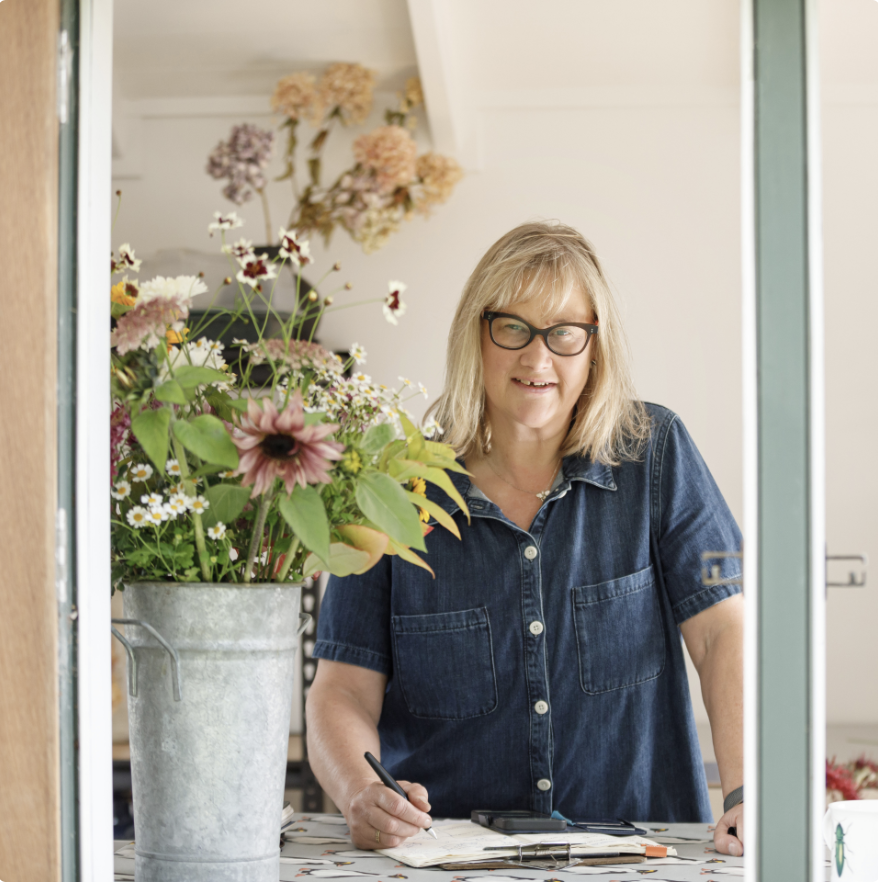
Written by Julie Treanor — owner of The Pickery and co-creator of the Floral Business Activator, currently adding resourcefulness into her business plan.
Follow Julie on Instagram @thepickery